

Concrete moves. It shrinks as it cures, then expands and contracts with temperature for the rest of its life. That movement has to go somewhere, and if the slab has nowhere to give, it cracks wherever it likes.
Joints solve that. They're deliberate weak points, cut or formed into the slab, that give the concrete a controlled place to move and crack instead of letting it happen randomly across your floor. You'll see them as straight lines running across garages, driveways, warehouse floors and paths.
The joint itself is usually filled or sealed to keep water, grit and debris out of the gap. That filler is the part that fails. Once it's gone, the exposed edges of the concrete either side start chipping away under traffic, water gets into the slab, and what began as a cosmetic gap becomes structural damage.
The joints are doing their job. It's the filler that needs looking after.
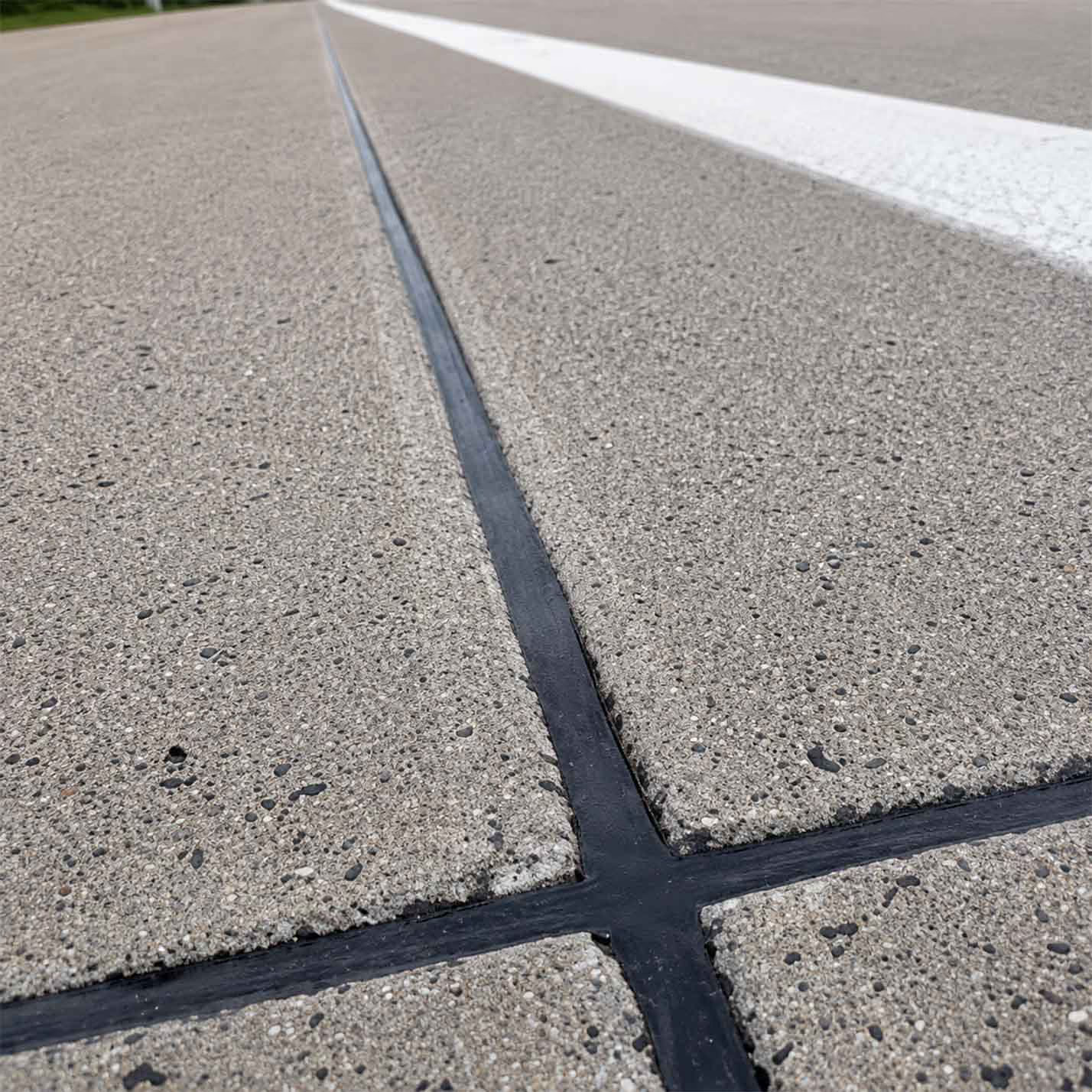
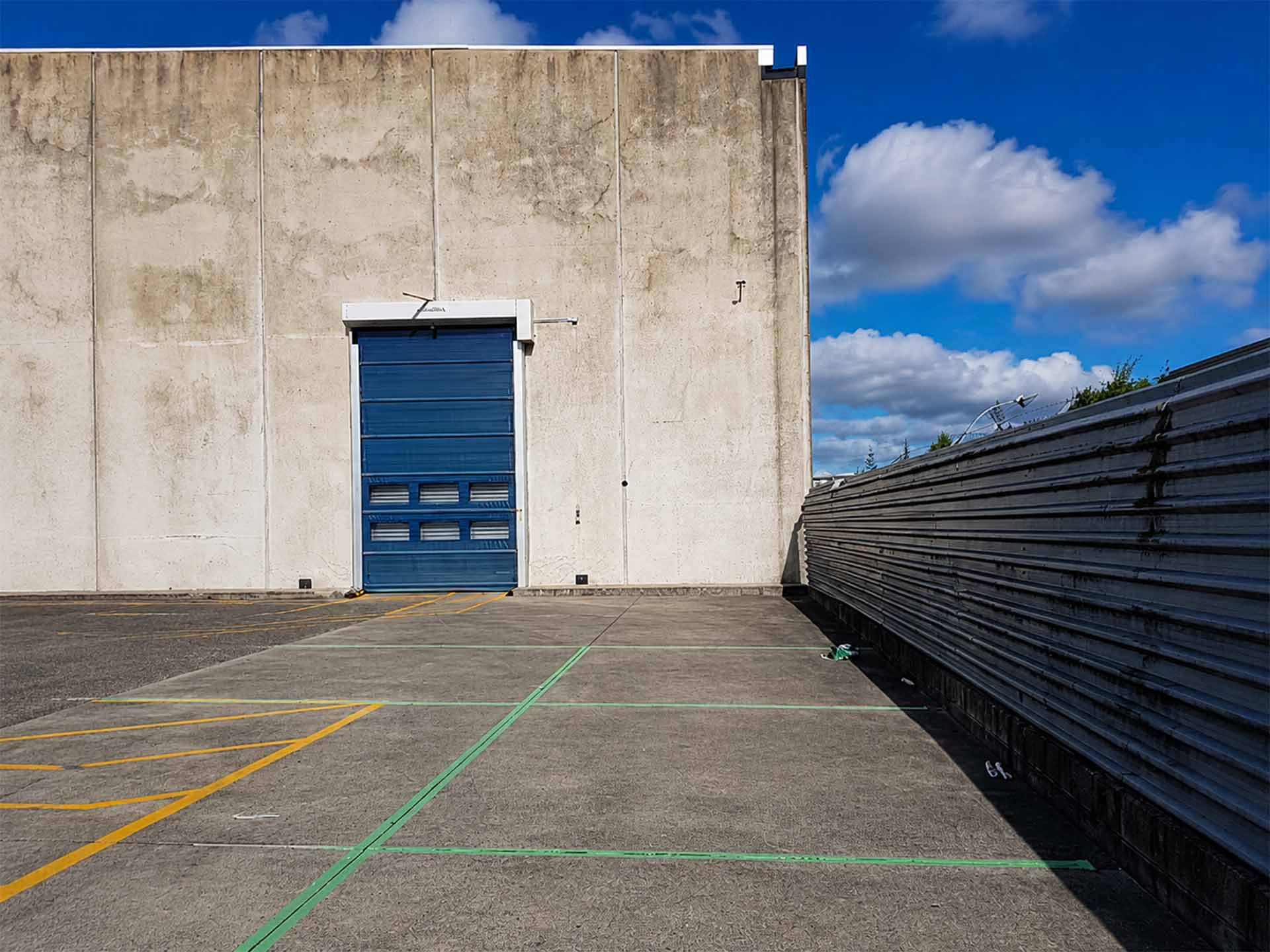
The concrete either side of the joint is breaking away, usually starting in the busiest spots.
The sealant has pulled away, dropped down, gone hard and cracked, or disappeared altogether.
The joint looks noticeably wider than the others, or wider than it used to be.
Anything growing in a joint means the seal has gone and water is getting in.
Forklifts, trolleys and vehicles hammer joint edges hardest. Warehouses and garages show it first.
Water sitting in or disappearing into a joint is going somewhere it shouldn't.
If you're seeing any of these, it's worth getting looked at before the edges break down further. Joint repair is one of the few concrete jobs that gets substantially more expensive the longer it's left.
Where the concrete edges are still sound and only the filler has failed. We clean the joint out completely, remove the old sealant, and refill it with the right product for how the floor gets used. The most common and most affordable job.
Where the concrete either side has started to chip and break away. We cut back to sound concrete, rebuild the damaged edges, and then reseal. This is the point most people call us, and it's still very fixable.
Where the joint and the surrounding concrete have broken down badly, often after years of heavy traffic. We remove the failed section, form the joint properly again, and reinstate it. More involved, but far cheaper than replacing a floor.
Which one your floor needs comes down to how far the damage has gone, and that's a site visit question. Jay will tell you straight, including when a simple reseal will do the job.
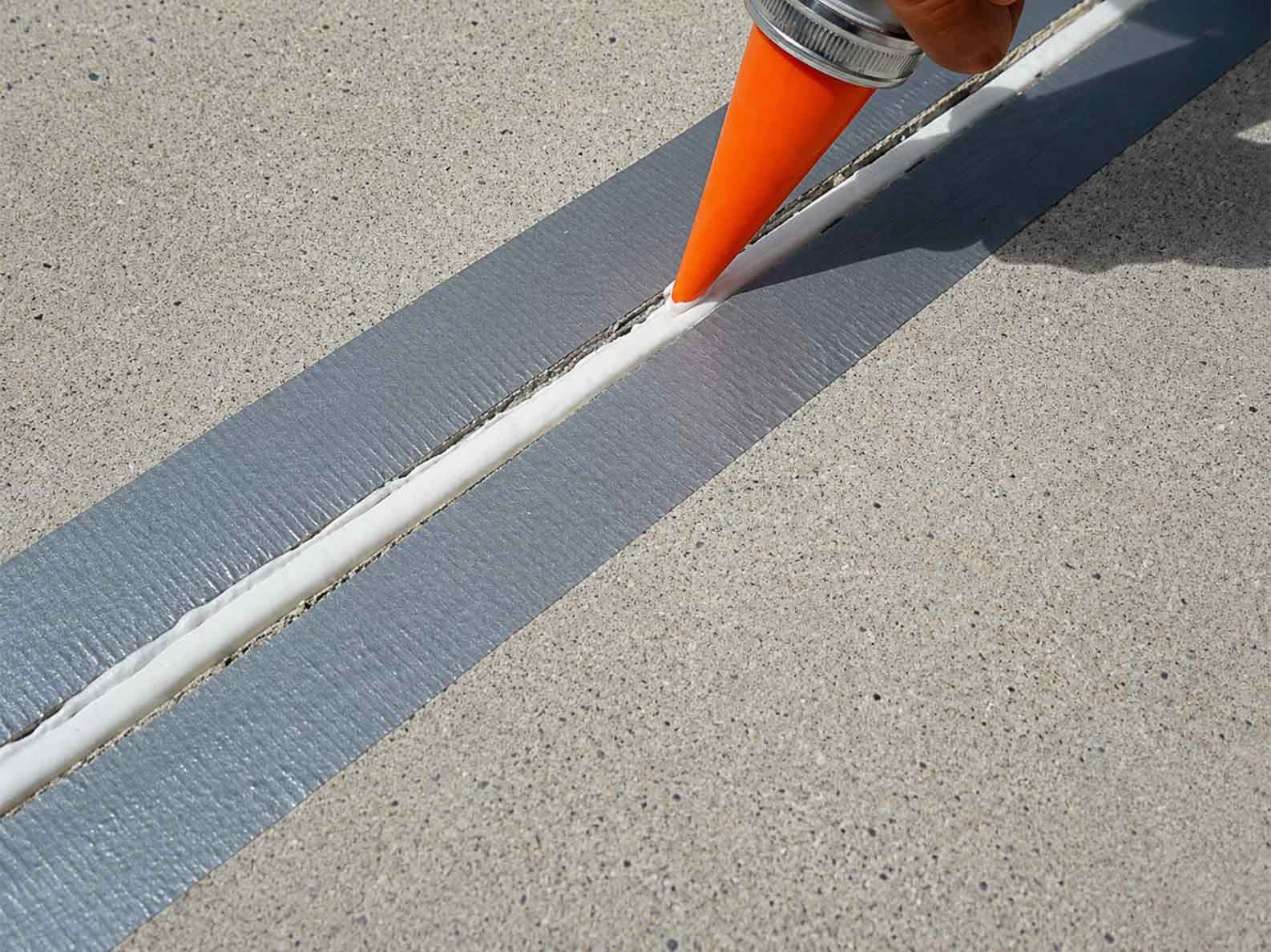
Joint fillers aren't all the same, and using the wrong one is why some repairs fail again quickly.
A joint in a warehouse floor taking forklift traffic needs a hard filler that supports the concrete edges as wheels cross it. A joint in an outdoor slab needs something flexible that copes with the concrete expanding in summer heat. A joint in a garage needs to handle vehicles, oil and cleaning. Get that wrong and the filler either tears itself apart or fails to protect the edges it's meant to be supporting.
We specify the filler based on how your floor actually gets used, not on what's convenient. That's why we ask what the space does before we quote it.
In food premises there's a further requirement. The sealant has to be approved for use around food, and it has to stand up to the specific chemicals, temperatures and pressures of your wash down regime. A product that performs well in a warehouse may not be suitable in a plant that gets hosed with hot caustic every night. We specify for the environment, not just the joint.
Once edges start breaking, every wheel and every impact takes a bit more. The repair area grows month by month.
Open joints let water into the slab and the base underneath, which causes problems well beyond the joint itself.
Open joints are a route in for insects and vermin, and in food premises they trap product and moisture where cleaning can't reach. Both are audit findings waiting to happen.
Broken joints trap dirt and can't be swept or scrubbed properly, which is a real problem in commercial spaces.
Broken edges and open gaps are a genuine safety issue in public and commercial areas.
A reseal is a small job. A rebuild isn't. The gap between them is measured in months of being left.
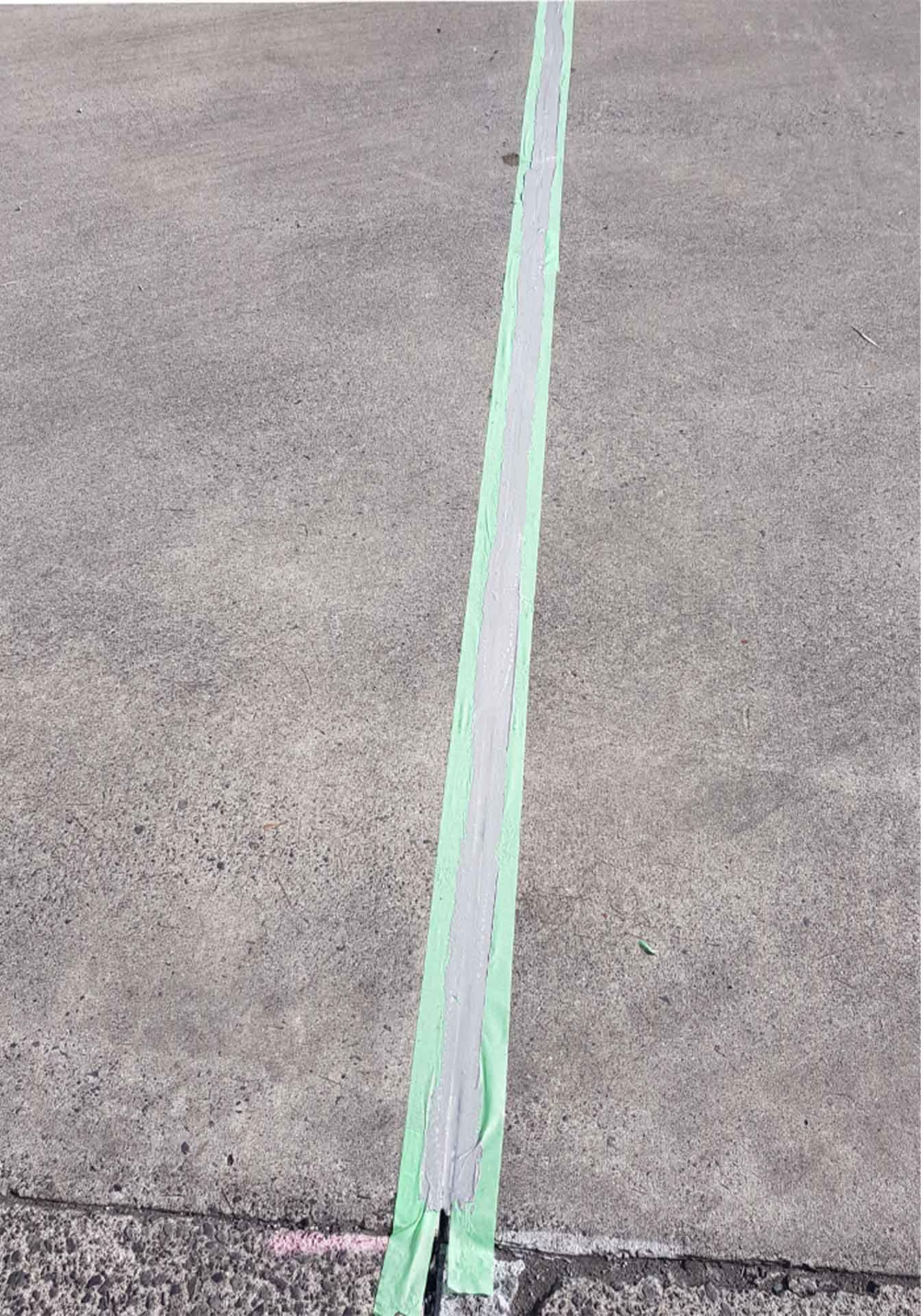
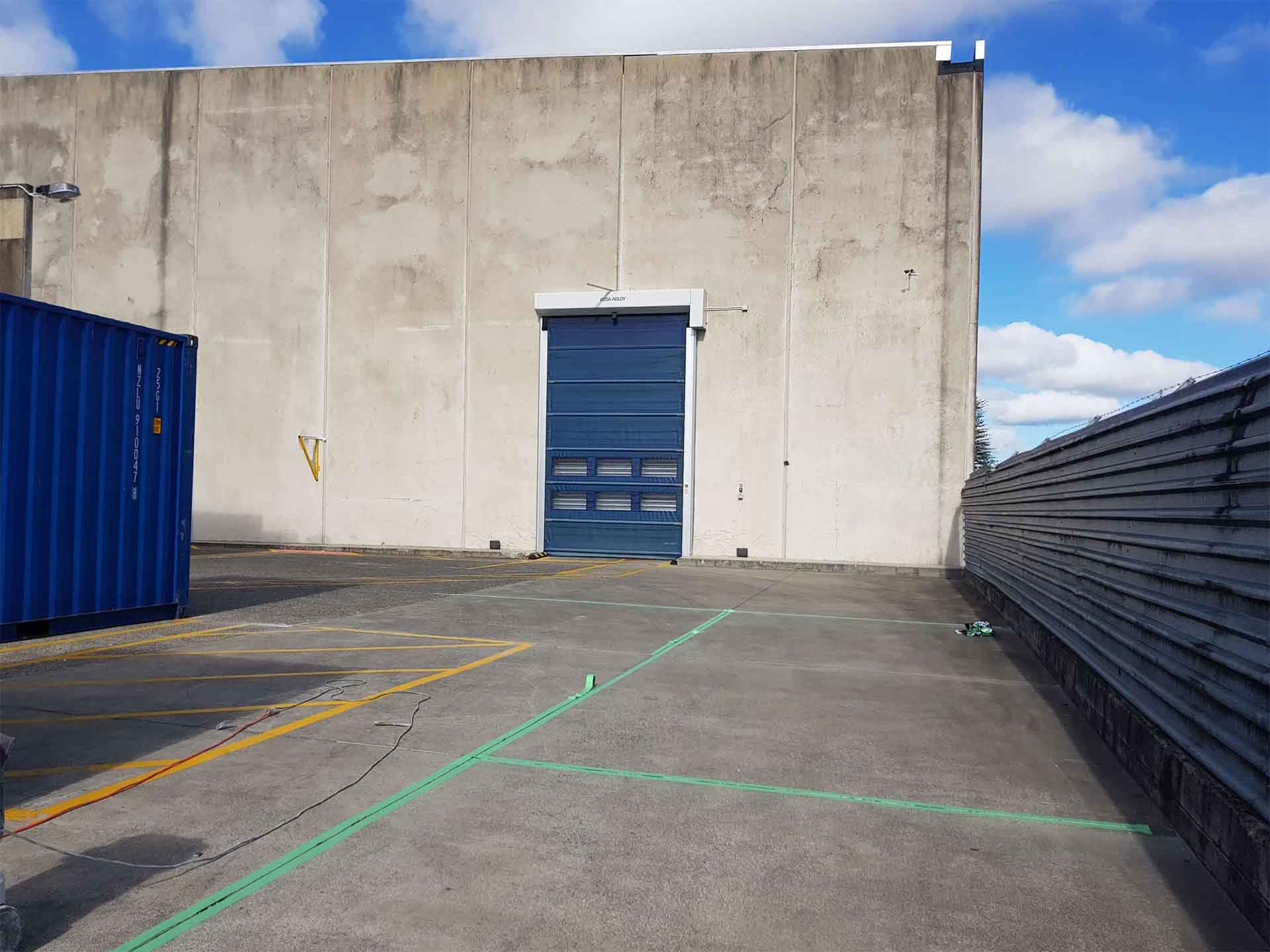
Home garages and driveways, where joints crack out under vehicles and weather. Warehouses and distribution floors, where forklift traffic destroys joint edges faster than anything else and where a broken joint slows the whole operation down. Workshops, factories and loading areas. Retail and hospitality floors, where broken joints are both a hazard and a cleaning problem. And outdoor paths, patios and hardstanding areas exposed to the full range of temperature movement.
In most buildings a failed floor joint is a maintenance problem. In a food plant, a laboratory, a pharmaceutical facility or a chemical handling site, it's a compliance problem.
An open or crumbling joint is a place where product, water and bacteria collect and cleaning can't reach. In chemical environments it's worse than that: a joint is a direct path for spilled liquid to get into the slab, under the floor, and out of whatever containment it was supposed to stay in. Either way, it's the sort of thing that gets written up at audit.
We seal joints in these environments with products specified for the actual conditions: what gets spilled on the floor, what it gets cleaned with, what temperatures it sees, and what has to be contained.
Tell us what your floor deals with, what it gets cleaned with, and what your shutdown window looks like. We'll come back with a scope and a price.
Processing plants, dairy factories, meat and seafood, bakeries, breweries, commercial kitchens and cool stores. MPI approved sealants with the approval code documented for your records.
Warehouses, decanting areas, transfer bays and courier depots, where joints have to resist what's being handled and keep spills contained.
Clean areas, production spaces and labs, where surfaces have to be non-porous, cleanable and chemically resistant.
Clinical spaces, theatres, kennels and wash-down areas that get disinfected constantly.
High-traffic warehouse floors where forklifts destroy joint edges and product integrity depends on the floor staying clean.
If a verifier, auditor or insurer has flagged your joints, tell us the deadline and we'll tell you honestly whether we can meet it.
Four steps, and most joint work is quicker and less disruptive than people expect. Here's how it runs.
In everyday terms, not much that affects the repair. Control joints are cut into a slab to control where it cracks as it shrinks. Expansion joints are gaps that let separate sections of concrete move independently. Both need sealing, both break down the same way, and we repair both.
For a small crack in a domestic path, sometimes. For anything carrying traffic, no. The joint has to be cleaned out properly first, and the filler has to suit the loads and the movement. Hardware sealant in a garage or warehouse joint usually fails within a year, and by then the edges have taken more damage.
It depends on how many metres of joint there are and whether you need a reseal, an edge repair or a rebuild. Resealing is comparatively inexpensive. The free assessment gets you a fixed price.
Most domestic and small commercial jobs are done in a day. Larger warehouse floors depend on the metreage and how much edge repair is involved. We'll give you a timeframe with the quote.
Yes. Warehouse and commercial joint work is usually staged so you can keep running, and we can work evenings or weekends by arrangement. Tell us your constraints at the quote stage.
Yes. For food premises we use joint sealants that carry current MPI approval as maintenance compounds, and we'll give you the product details and approval code so it goes straight into your compliance records. It's worth knowing that MPI approves products rather than contractors, so if anyone tells you they're "MPI certified", ask what they actually mean by it.
Tell us the deadline when you call. We'll look at the joints, tell you honestly what's involved and whether we can meet the timeframe, and quote it properly. If we can't hit your date we'll say so rather than take the job and let you down.
No obligation and no call centre. Jay will look at your floor, tell you honestly whether it needs a reseal or a rebuild, and give you a fixed price.