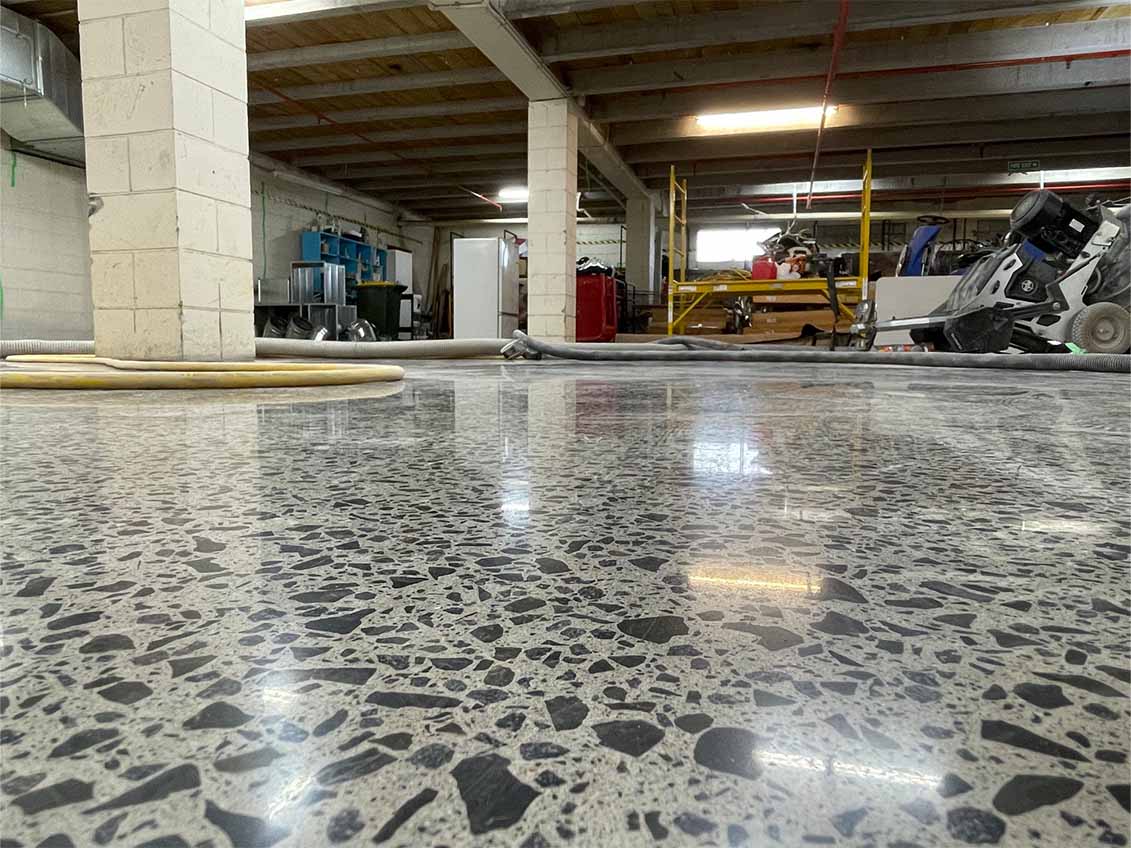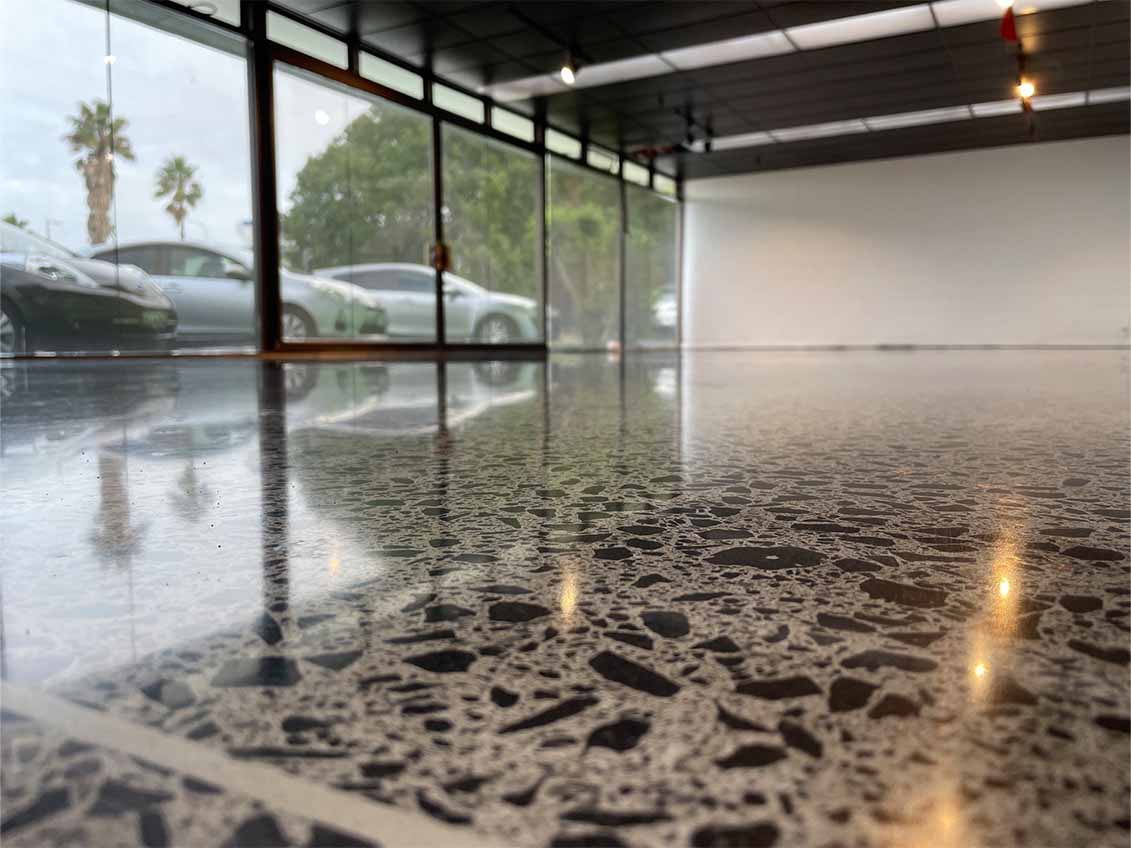
Hiper Trowel equipment covers ground that traditional polishing machines can't match. Fewer days on site, a lower cost per square metre, and a finish that holds up to industrial use. Auckland based, working nationwide on large projects.


Traditional concrete polishing works in passes with machines built for rooms. On a house that's fine. On a 5,000 square metre warehouse it becomes the critical path in your programme, because the machine simply can't cover enough ground per day and the labour cost climbs with every day it takes.
Hiper Trowel equipment is built for area. It covers substantially more ground per pass, which changes the maths on a large floor in three ways: the job takes fewer days, the labour component drops, and the saving comes off your rate per square metre rather than sitting in someone's margin.
We were among the first in New Zealand to adopt this technology for concrete polishing, so we've been running it long enough to quote it accurately and programme it reliably.
Large floors finish in a fraction of the time traditional polishing takes, which takes pressure off the trades following you.
Less labour per metre, and the saving is passed through in the rate rather than absorbed.
Unlike most trades, our rate improves with scale. The bigger the floor, the better the number.
We can tell you accurately how many days a floor of your size will take, so it can be planned around rather than worked around.
Less crew, less coordination, less induction, less congestion in a live build.
Speed doesn't cost you quality. The finish specification is the same one we deliver on premium residential work.
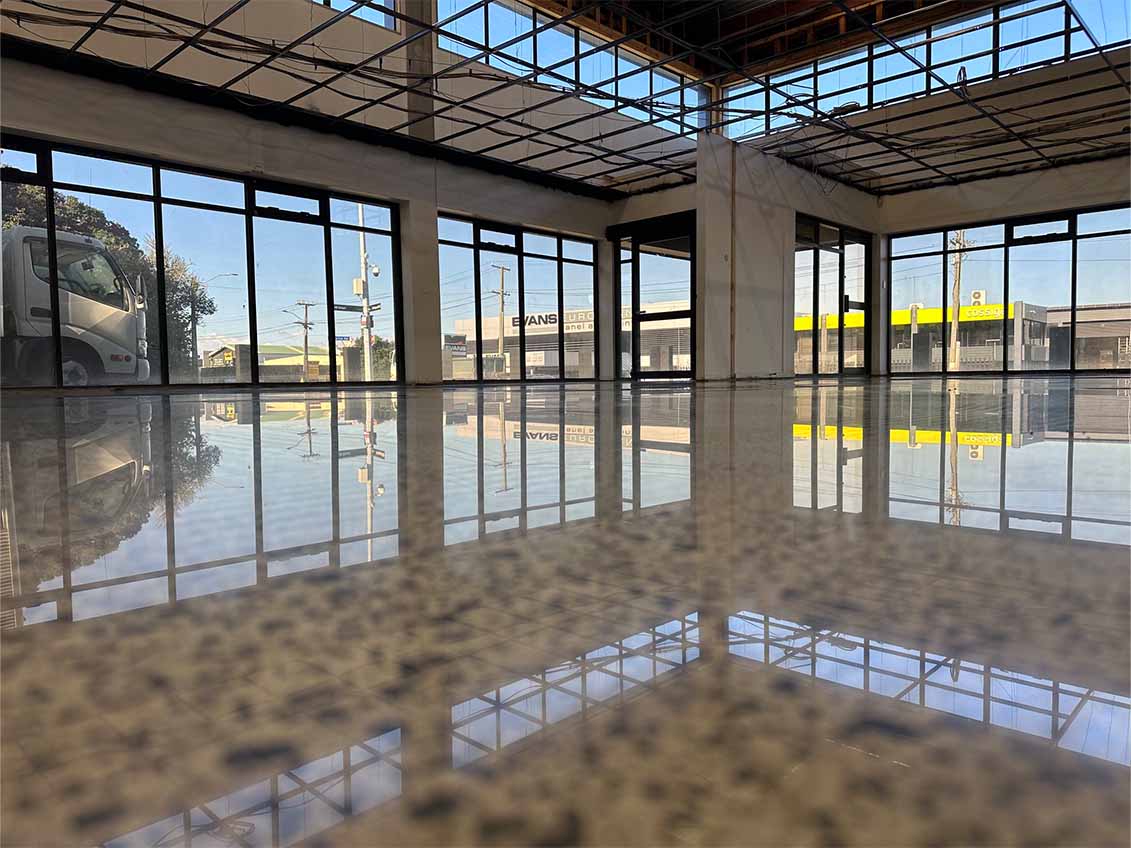
Large open floors where durability, light reflectivity and easy cleaning all matter.
Hard wearing surfaces that stand up to plant, traffic and constant use.
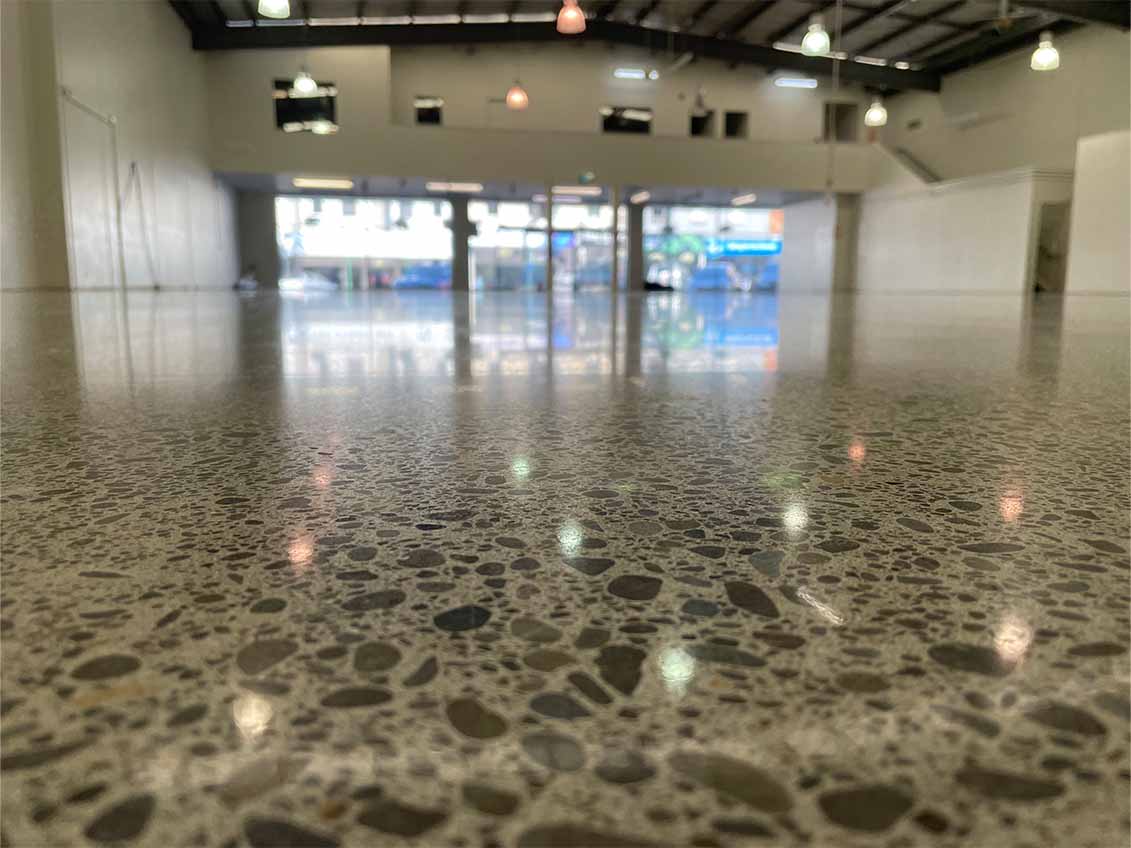
Big floor areas that have to look good and survive trolleys, foot traffic and cleaning machines.
Multi level and multi tenancy floors where programme certainty matters as much as finish.
High traffic community and institutional floors.
Floors taking vehicle traffic where a coating wouldn't last.
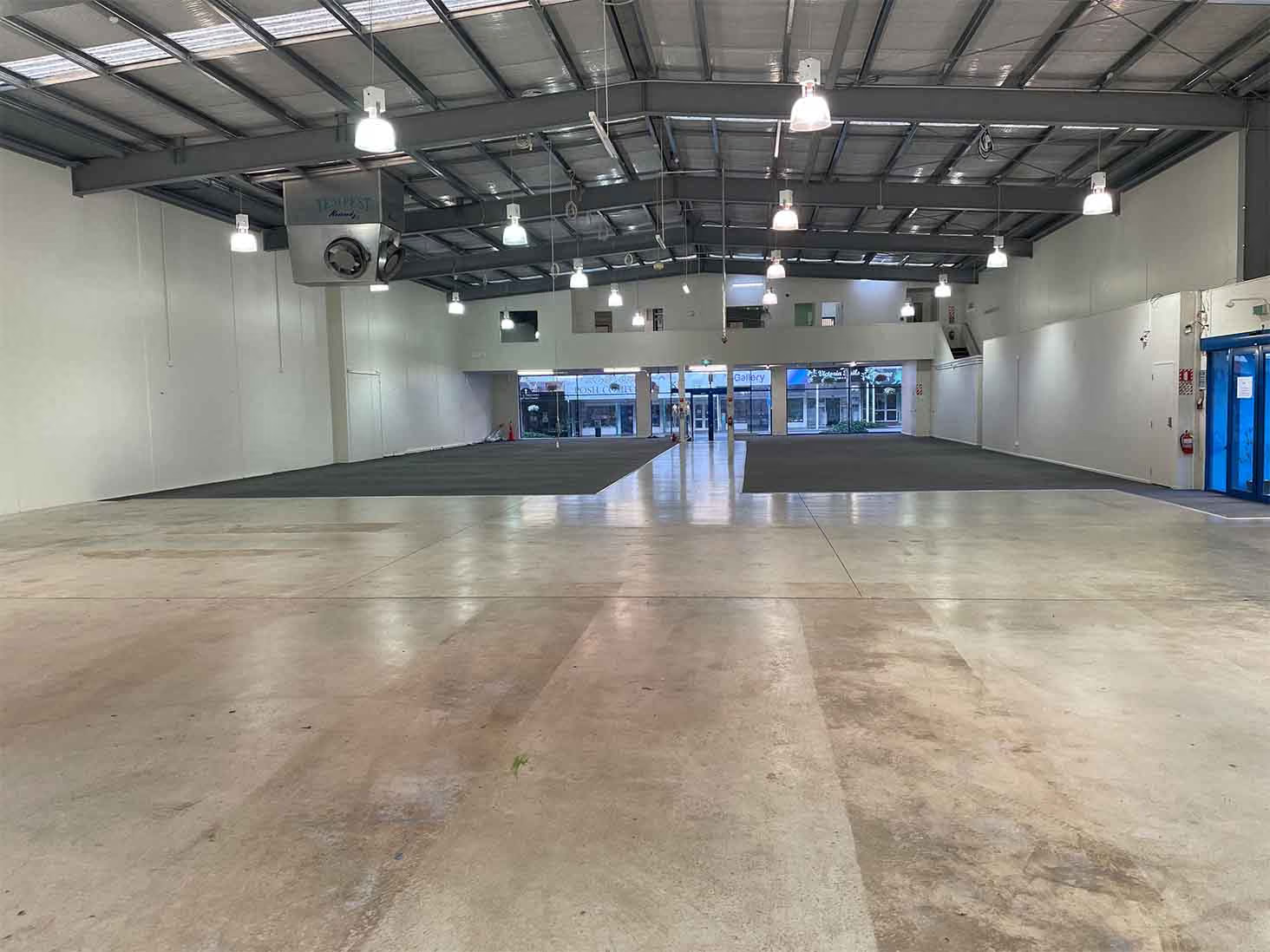
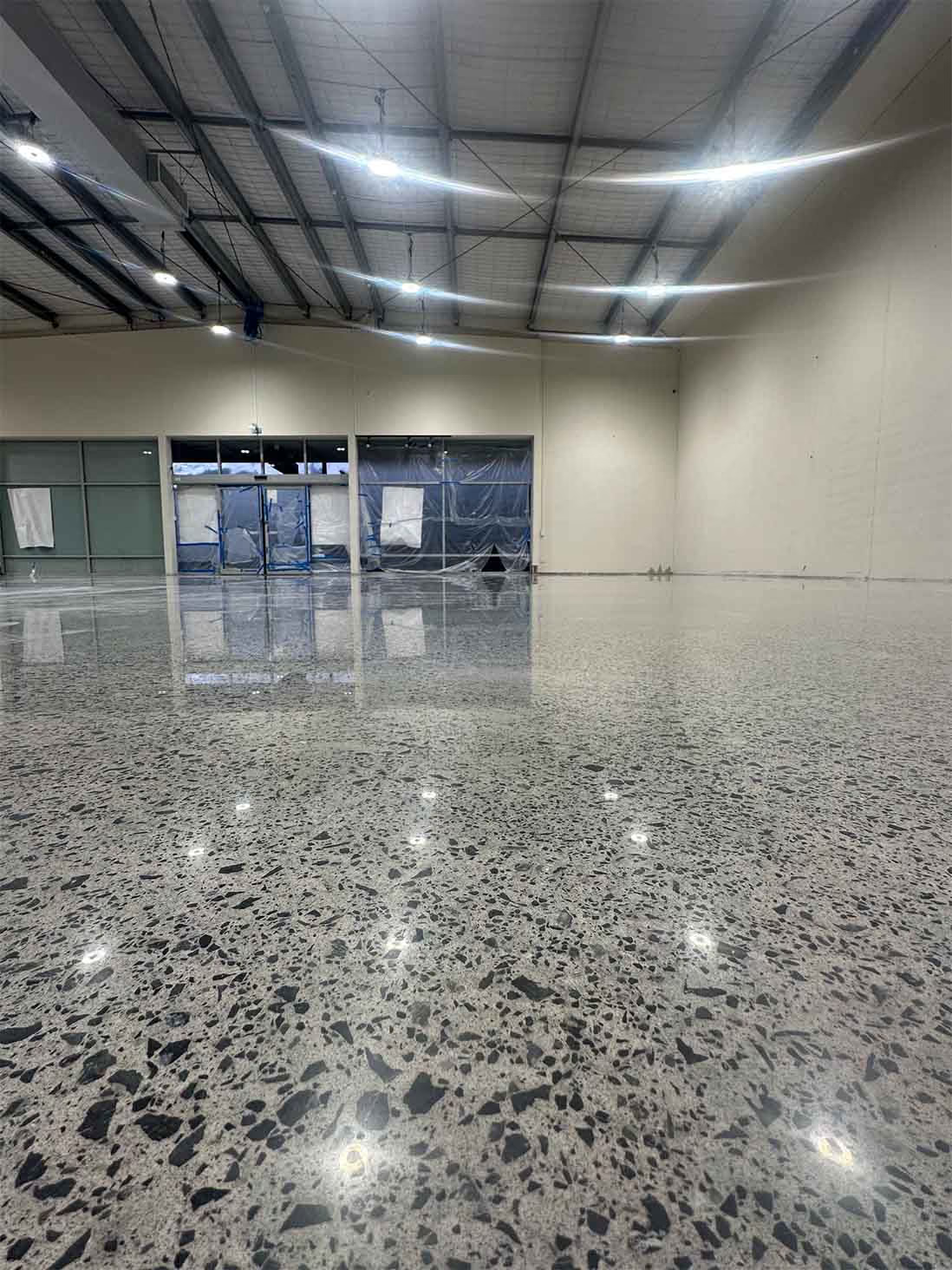
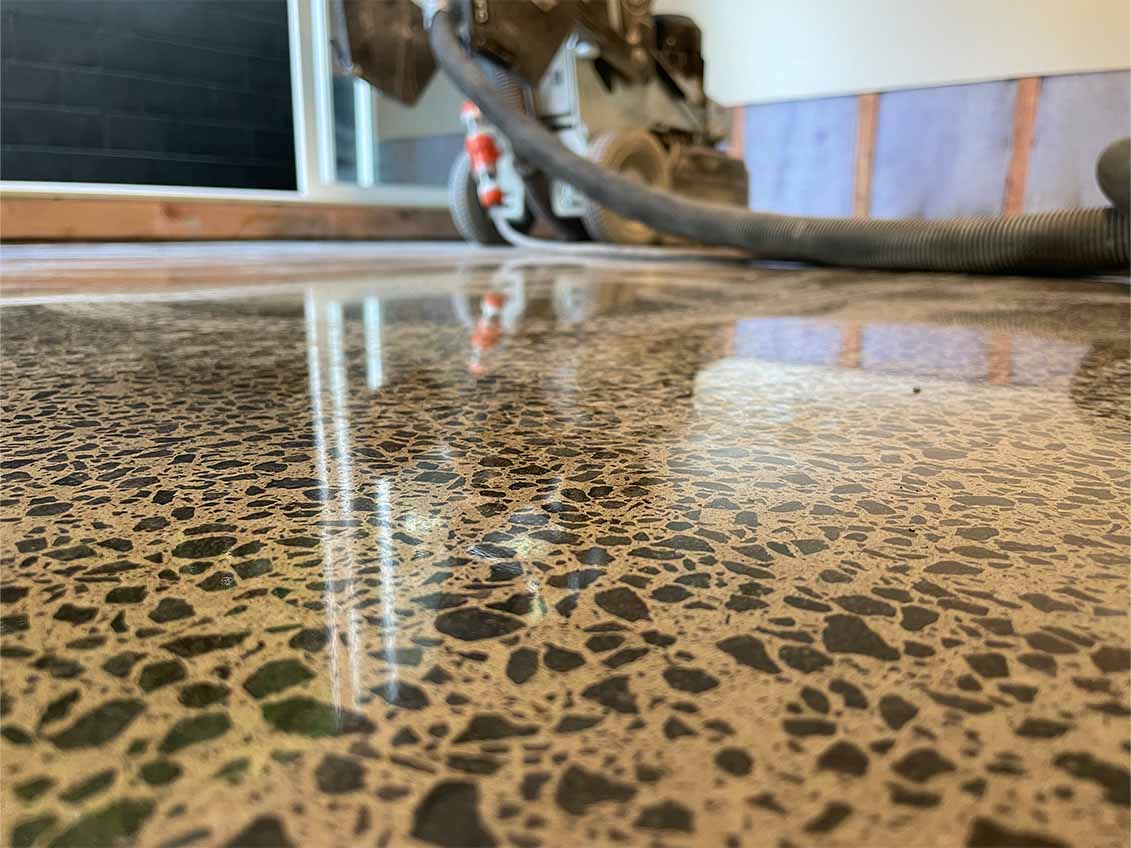
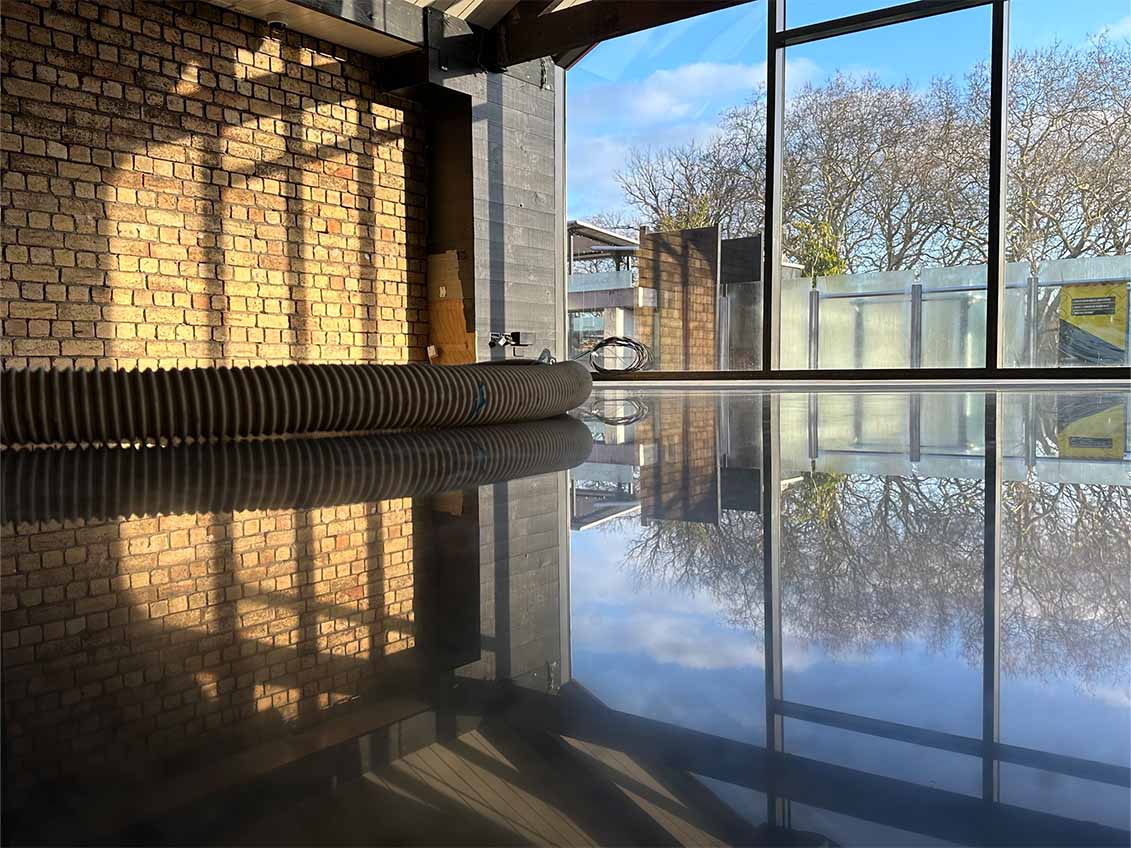
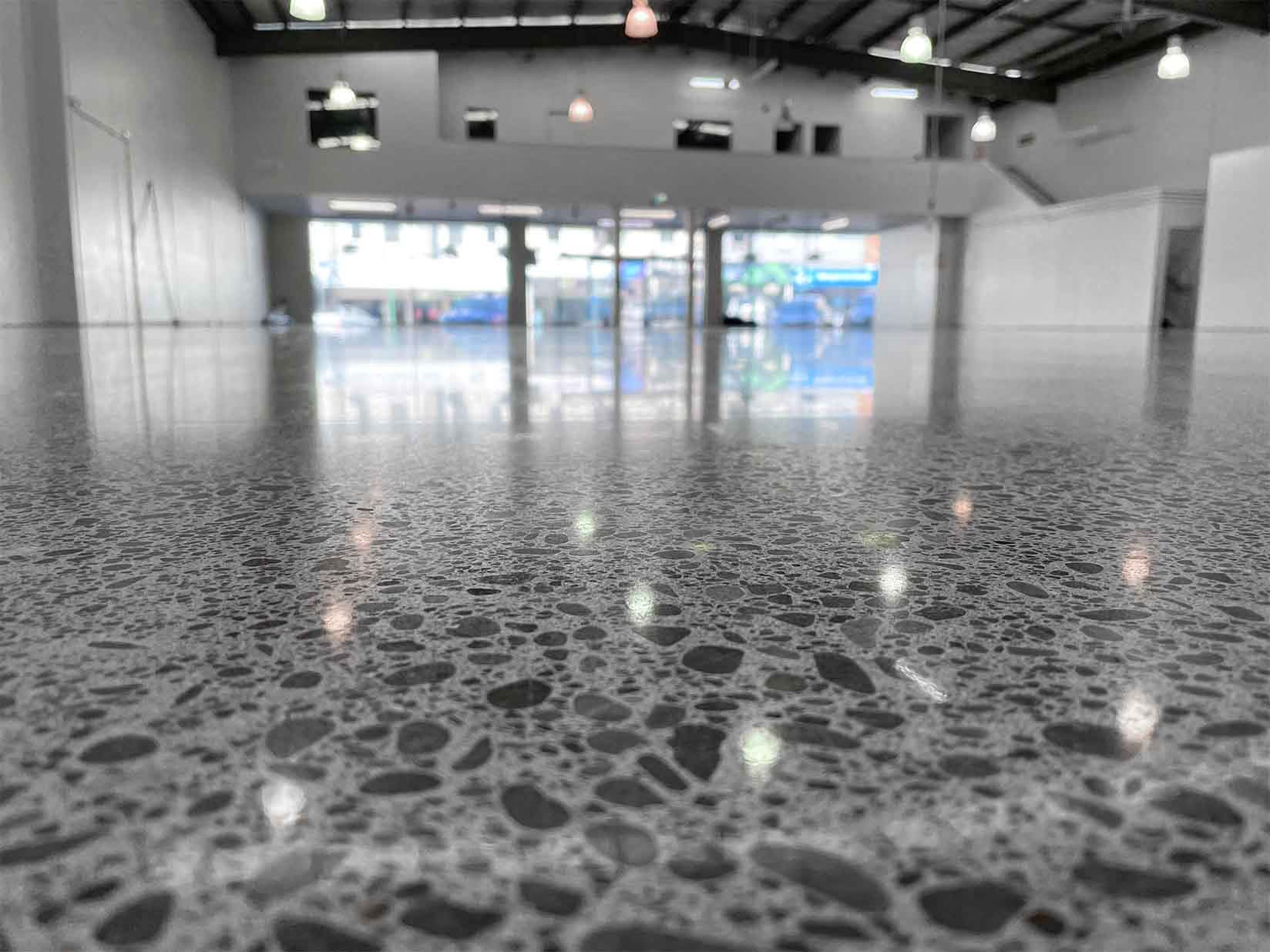
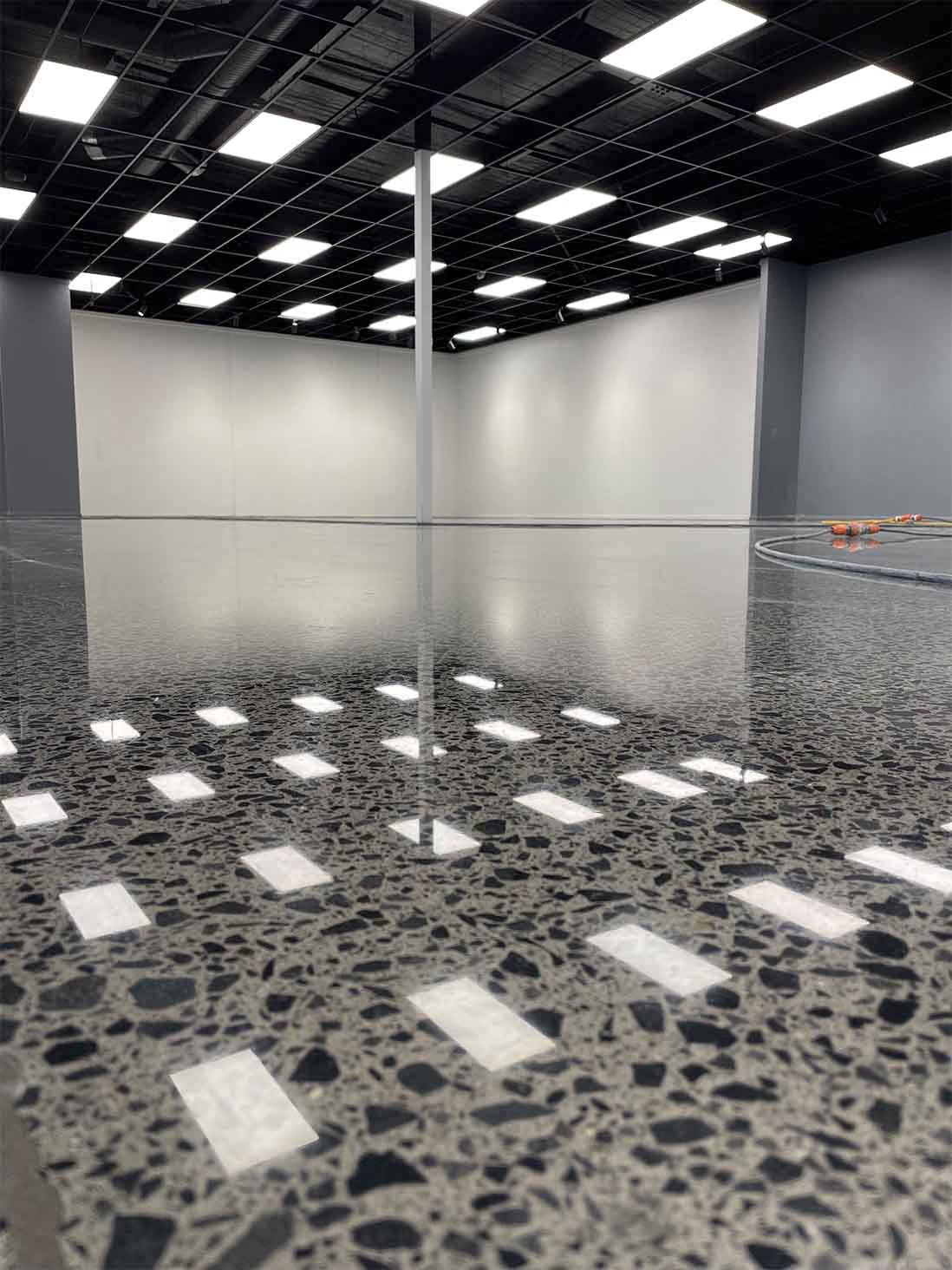
The finish is mechanically polished concrete, not a coating. The floor is ground, hardened and polished so the surface is the concrete itself, which is why it stands up to industrial use in a way applied coatings don't. Nothing to peel, nothing to recoat on a cycle, and nothing that fails in the traffic lanes first.
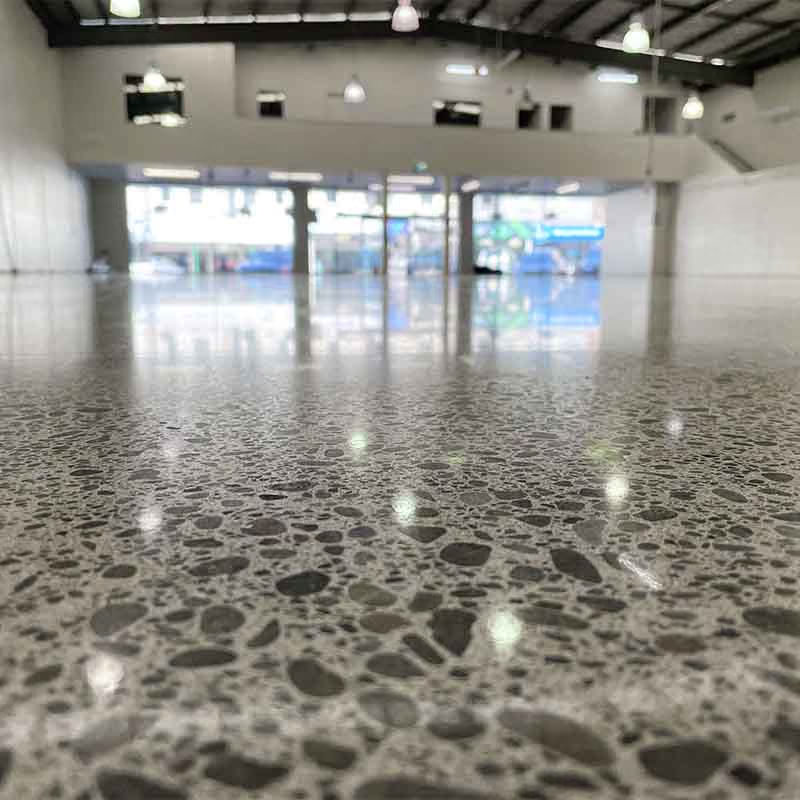
You choose how much stone shows and how much shine the floor carries, the same as on any polished floor. For commercial and industrial spaces the practical considerations usually drive that decision: light reflectivity to reduce lighting costs, a finish that cleaning machines work with, and a sheen level that doesn't show every mark.
We'll talk through what suits your operation rather than defaulting to maximum shine.
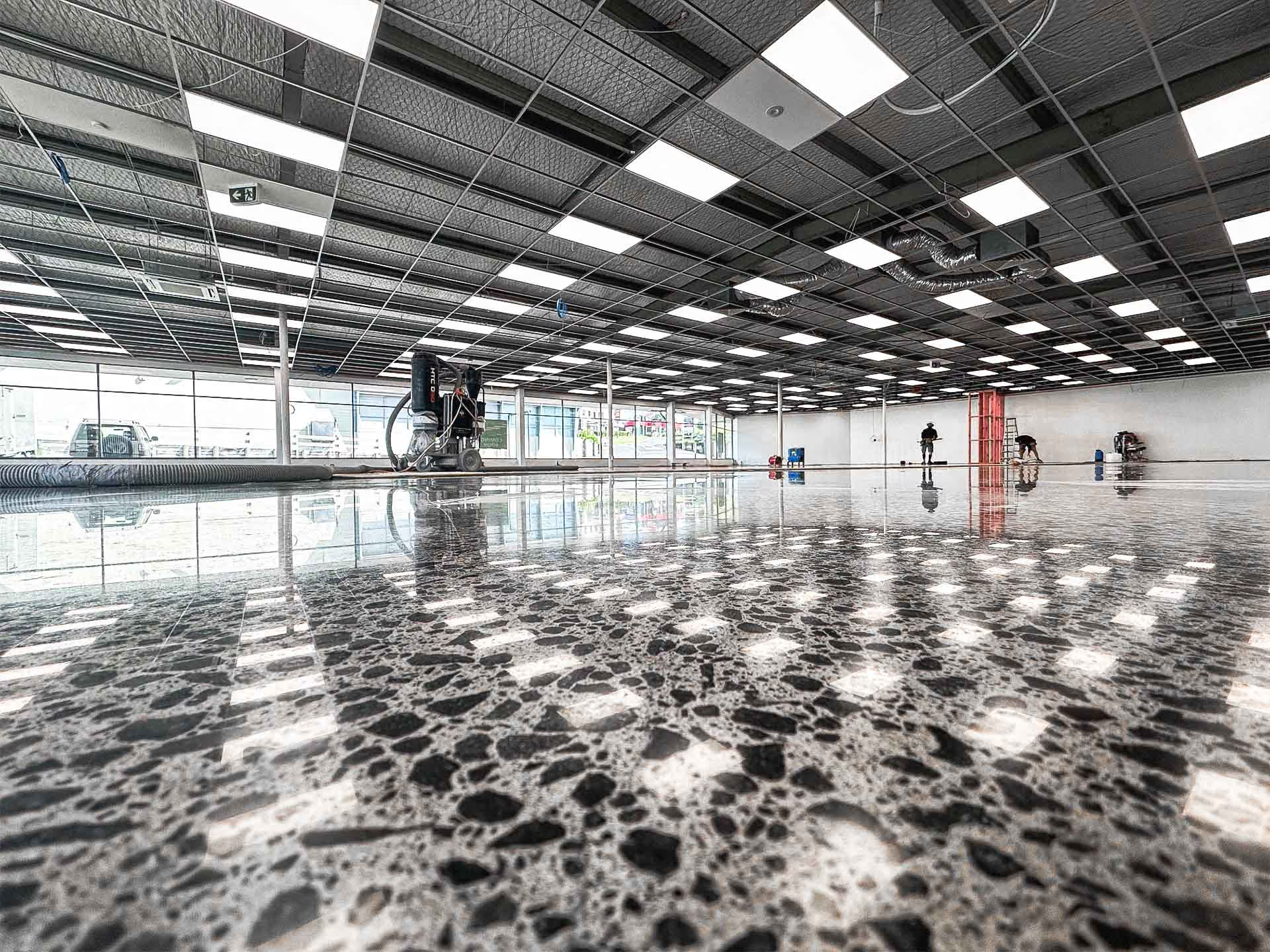
Large floors are rarely simple scheduling. We're used to the constraints.
Floors can be done in sections so other trades keep working and operations keep running.
Dust extraction runs on every grind, and we can seal off work areas. Retail and warehouse floors are regularly done around trading and operations.
Nights and weekends by arrangement where the programme demands it.
New concrete needs at least 28 days before polishing. Involve us at design or pour stage and we'll tell you the earliest workable date, which is far easier than discovering the constraint late.
We'll work to your programme and flag anything the slab throws up straight away, with options, rather than stopping and calling you at the end of the day.
You need an accurate rate, a realistic duration, and someone who turns up when the programme says they will. That's the whole brief, and it's the part of this job we take most seriously.
Send us drawings, areas and your programme dates and we'll come back with a rate per square metre, a duration, and the constraints we can see from the plans. For repeat work across multiple sites or stages, we'll quote it as a rate rather than job by job.
Health and safety documentation, site inductions and method statements are all straightforward. Tell us what your site requires.
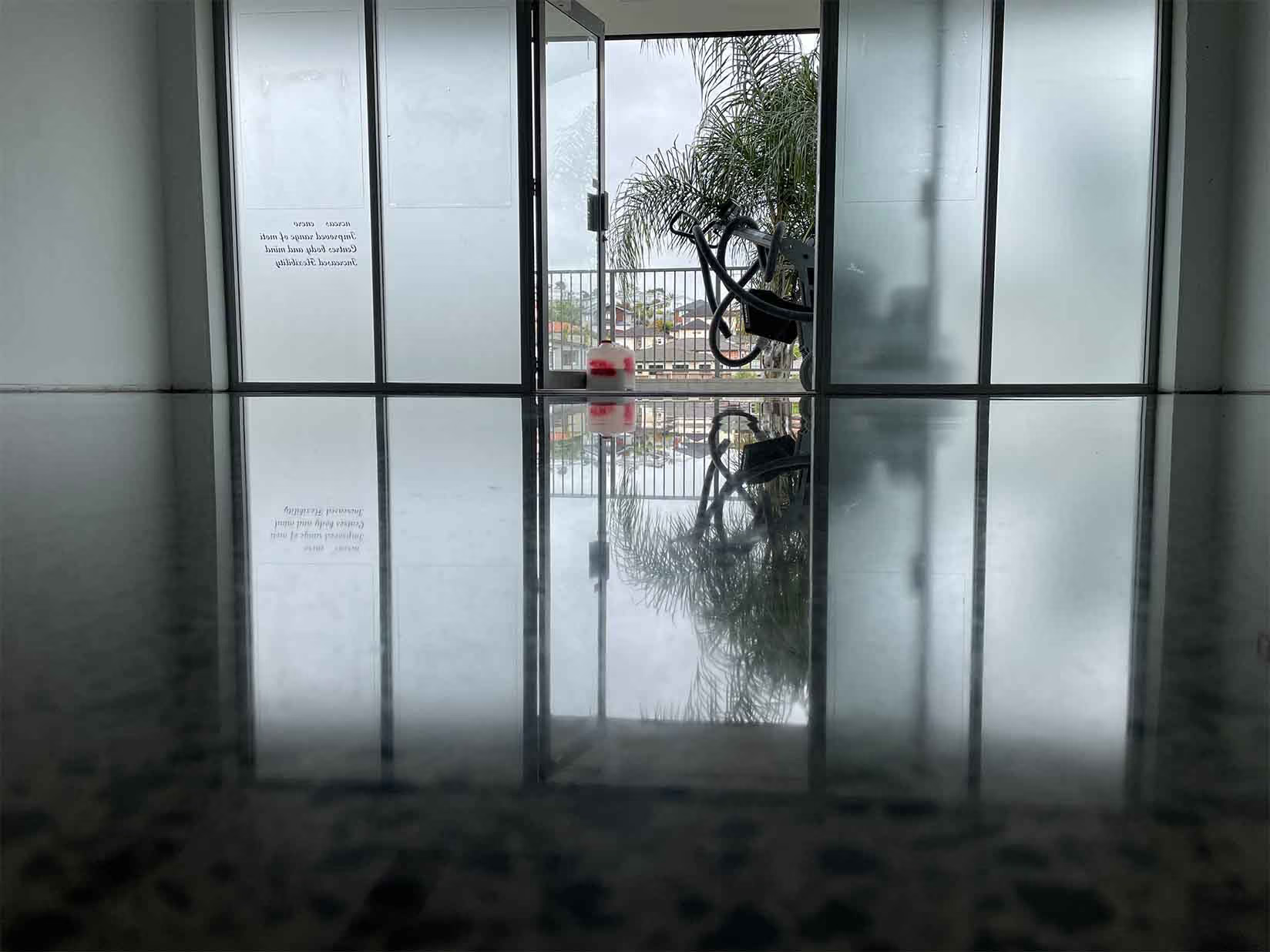
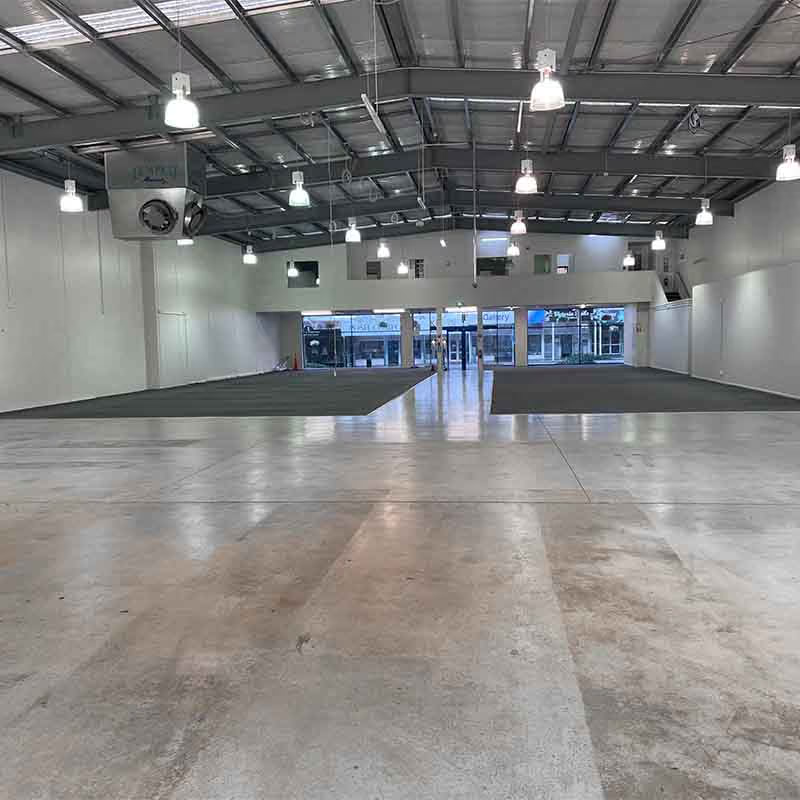
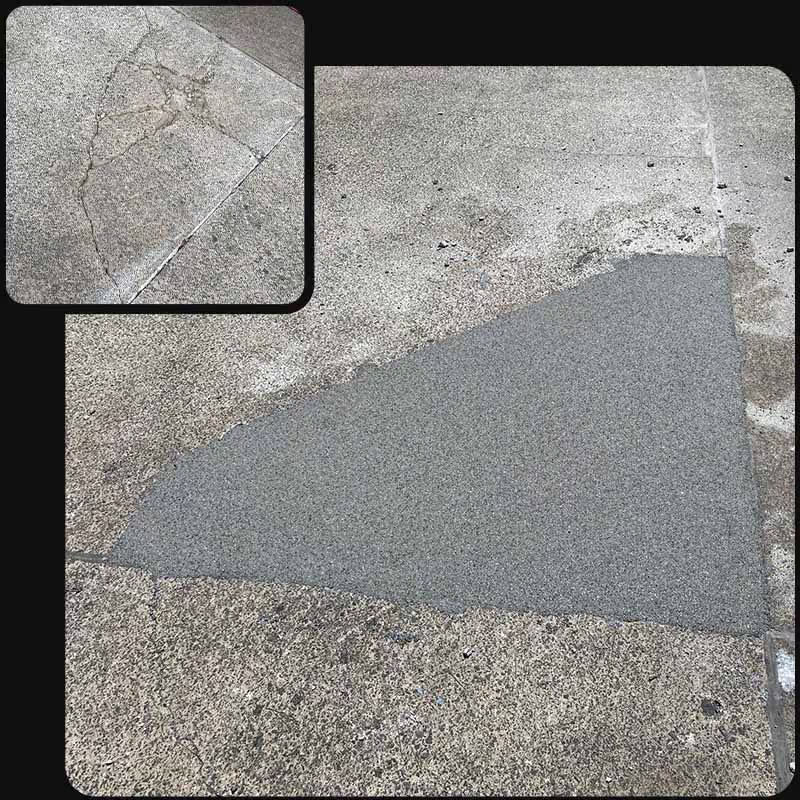
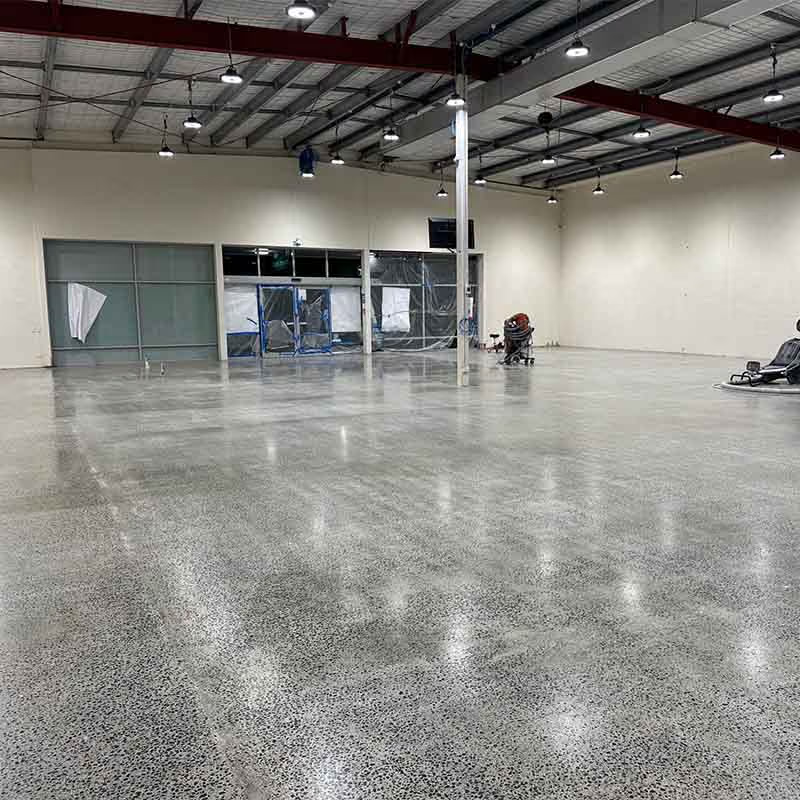
Five stages, with the numbers agreed before anyone arrives on site. Here's how a large floor is delivered.
It comes into its own from around 1,000 square metres up. Below that, our standard polishing equipment is usually the better and more economical choice, and we'll tell you which applies to your floor.
The rate depends on area, slab condition, the specification and site constraints. Larger areas attract better rates. Send us your area and drawings for an accurate number.
Usually yes, in stages. We'll work through the floor in sections around your operation, with dust extraction throughout. It takes more planning and we'll be upfront about what it adds to the duration.
Yes. We're Auckland based and travel nationwide for projects at this scale. Travel is priced transparently in the quote.
Well, because it's the concrete itself rather than a coating. There's no applied layer to lift under wheel loads or point loading. Joints still need proper attention, which we handle as part of the preparation.
Routine cleaning plus periodic re-protection. For large commercial floors we can set up a scheduled maintenance plan so it's handled rather than remembered.
Send through your area, drawings and programme dates. We'll come back with a rate per square metre, a realistic duration and any constraints we can see from the plans. No obligation.