Guides
August 14, 2026
Polished Concrete vs Grind and Seal
The honest difference between the two, and which one your floor actually needs. Cost, durability, looks and where each one wins.

The honest difference between the two, and which one your floor actually needs. Cost, durability, looks and where each one wins.
The short answer: grind and seal grinds your floor back and protects it with a sealer that sits on top. Polished concrete keeps going through much finer stages until the concrete itself shines, with no coating involved. Grind and seal is quicker and cheaper. Polished concrete lasts longer and carries a 10-year warranty. Both are good floors, and the right one usually comes down to your slab, your budget and where the floor is.
Here's the longer version, including the bits most companies leave out.
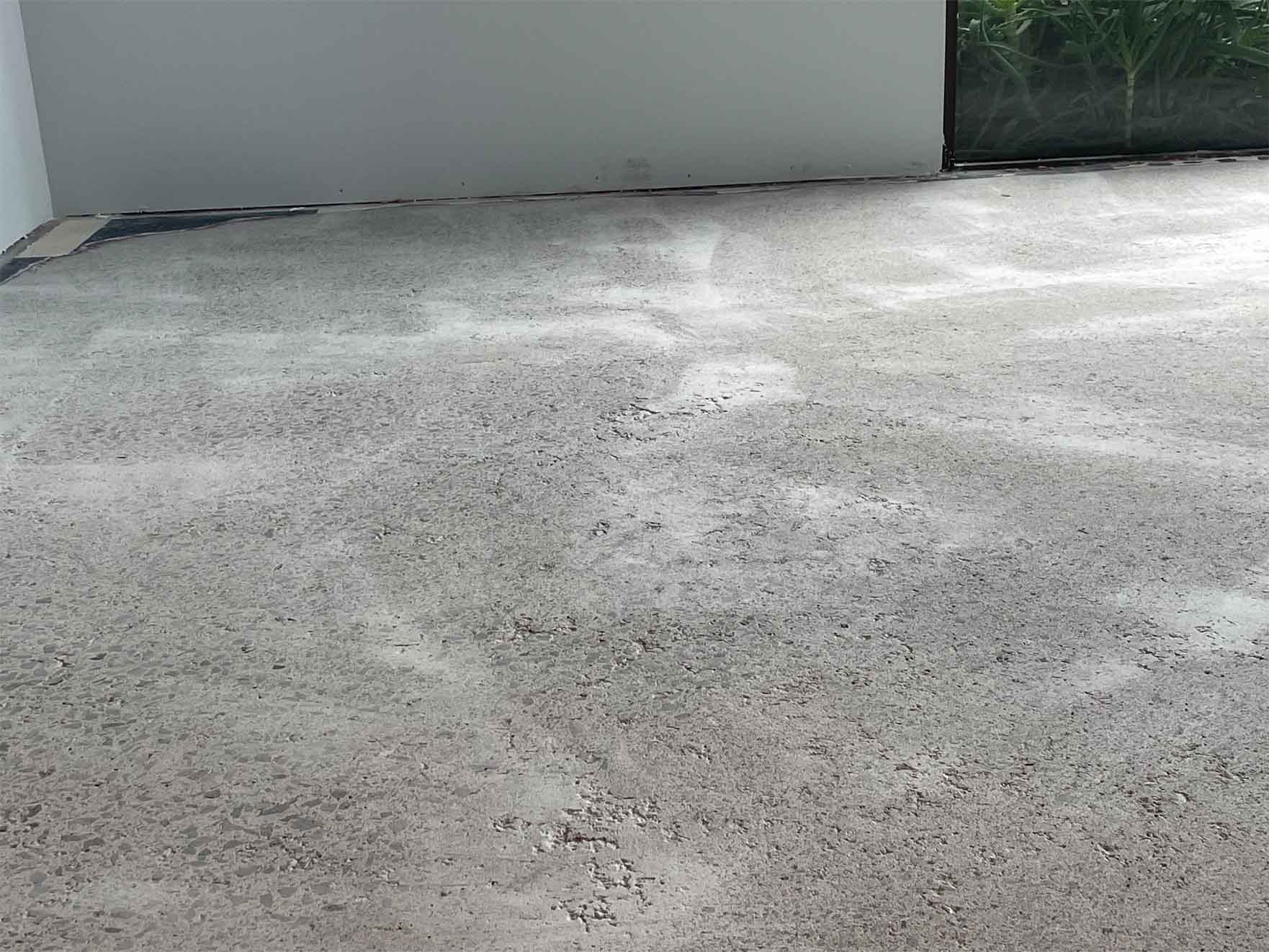
Both jobs begin identically. We grind your slab with diamond tooling, working through a series of increasingly fine passes. This flattens the floor, takes off whatever was on it, and exposes as much or as little of the stone inside the concrete as your slab allows.
That's the part people picture when they imagine either service, and it's why the two get confused so often. Up to a point, they're the same job.
The difference is where we stop.
Grind and seal stops at 120 grit, at the end of the rough grinding stages. The floor is flat and the stone is exposed, but the concrete itself isn't shiny yet. So we protect it with a quality sealer, and the sealer is what gives the floor its finish and its shine.
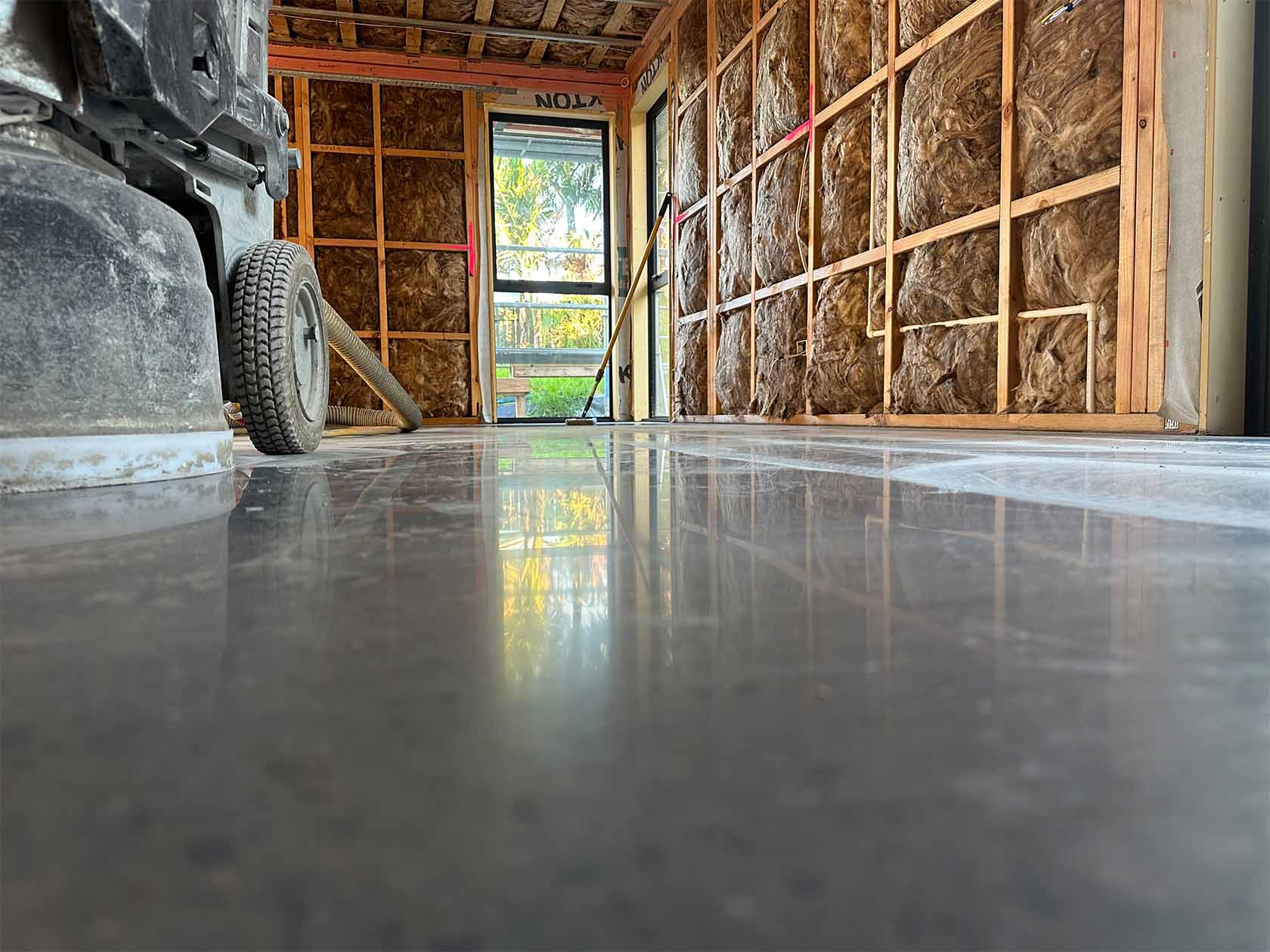
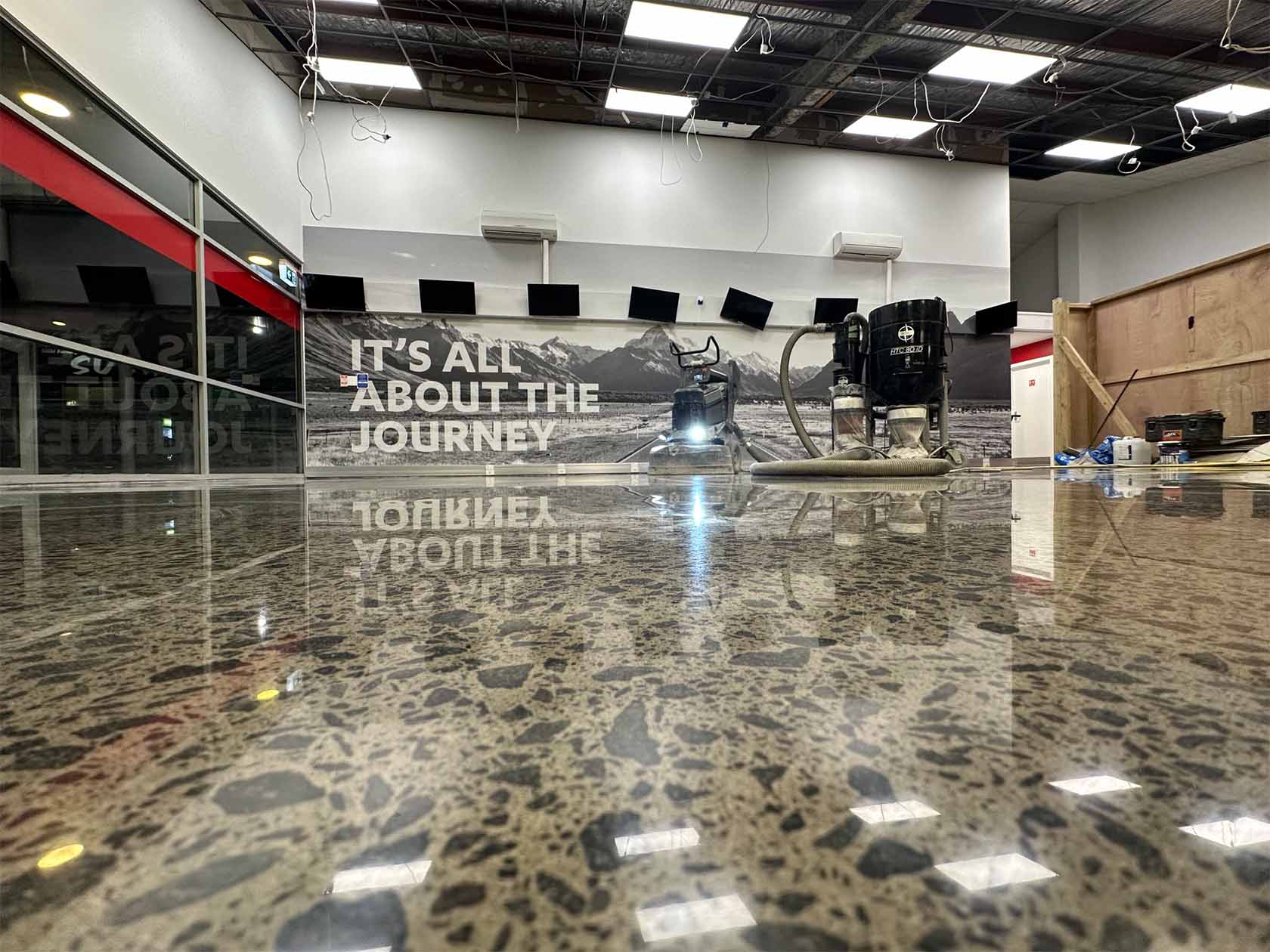
Polished concrete keeps going. After the rough grinding, we treat the floor with a liquid hardener that soaks in and reacts with the concrete, making the surface denser and tougher. Then we work through much finer polishing stages, from 400 grit up to 800, 1,500 or 3,000, until the concrete has a shine of its own.
That's the whole difference, and everything else follows from it. One floor's finish sits on top of the concrete. The other floor's finish is the concrete.
Nothing to wear off. A sealer is a protective layer, and layers wear, particularly where people walk most. A polished floor has no layer to wear through, so it doesn't develop dull traffic paths while the edges stay glossy.
Different maintenance. Sealed floors need recoating every few years, depending on traffic and whether they're inside or out. Polished floors need their stain protection topped up far less often. Neither is difficult, but one comes around more regularly than the other. More on looking after either floor here.
Different lifespan. With reasonable care, a polished concrete floor is a decades-long floor. A grind and seal floor lasts a long time too, but you're maintaining the sealer over that period rather than leaving it alone.
Different price. Grind and seal costs less, because it's fewer stages and fewer days on site. That's not a small difference on a large floor.
This is where a lot of confusion happens, so it's worth being clear about.
With polished concrete, you're choosing how far we polish. That gives you low, medium or high shine. There's no such thing as a genuinely matte polished concrete floor, because matte means we stopped early, and stopping early means it isn't polished.
With grind and seal, the finish comes from the sealer, so you can have true matte, satin or gloss. If low sheen is the look you're after, grind and seal is the service that actually delivers it.
So if someone quotes you "matte polished concrete", ask what grit they stop at. They're describing a sealed floor, and it should be priced like one.
Your slab isn't strong enough to polish. Older or softer concrete can fail under full polishing. A grind and seal handles it comfortably, and it's the standard answer for tired slabs.
The floor is outside. Patios, paths and pool surrounds need protection that copes with sunlight. Sealers are made for that. Polished concrete belongs indoors.
The budget matters more than the lifespan. Garages, sleepouts, rentals and back-of-house commercial floors often don't warrant polish money, and grind and seal gives you the same exposed concrete look for less.
You need it done quickly. Fewer stages means fewer days, which matters when you're opening a shop or settling on a house.
You want a matte or satin finish. As above, that finish only comes from a sealer.
It's a floor you'll live on for decades. Living areas, kitchens, hallways. The extra cost is spread over a very long time.
It's a showroom, retail or hospitality floor. Where the floor is part of how the space presents, and where traffic would wear a sealer unevenly.
It's an industrial floor taking real punishment. Forklifts and heavy traffic will find the weak point in any applied coating. There isn't one in a polished floor.
You'd rather not think about it again. Less frequent maintenance, and a 10-year warranty on the finish.
Honestly, you often can't tell by looking, and that's not a sales line. It comes down to how hard and sound the concrete is, which is something you assess on site.
A few things that point one way or the other:
Age isn't the decider. Plenty of old slabs polish beautifully, and the aged aggregate in them gives a finish new concrete can't copy. More on polishing existing slabs here.
A soft or sandy surface suggests the slab won't take a full polish, and often means grinding back first to see what's underneath.
Cracks and damage don't rule out either option, but they need dealing with before a finish goes down. A crack under a polish is still a crack.
What's on it now matters. Carpet glue, old paint, tile mortar and coatings all have to come off first, whichever finish you choose.
If you're comparing quotes and one contractor recommends a polish while another recommends a grind and seal on the same floor, that's worth asking about. There's often a legitimate reason for both, but you're entitled to hear it.
We do both, which means we've got no reason to push you toward one. When Jay looks at a floor, he's working out what the concrete can honestly take and what you're actually going to use the space for.
Sometimes the answer is the premium option. Often it isn't, and we'll say so. Recommending a grind and seal to someone who came in asking about polished concrete costs us money on that job and tends to be why they call us back for the next one.
Choose grind and seal if the floor is outdoors, if your slab isn't up to a polish, if you want matte or satin, or if the budget or timeframe is the deciding factor.
Choose polished concrete if it's a long-term interior floor, if it takes heavy traffic, or if you'd rather do it once and leave it alone.
If you're still not sure, that's genuinely what the free on-site assessment is for. We'll look at your slab, tell you what it can realistically become, and quote the option that suits it rather than the one that suits us.
Still weighing it up?
Jay will come and look at your floor, tell you honestly which service it needs, and give you a fixed price. No obligation and no call centre.
Jay will come and look at it, tell you honestly which service it needs, and give you a fixed price. No obligation and no call centre.